Product Features
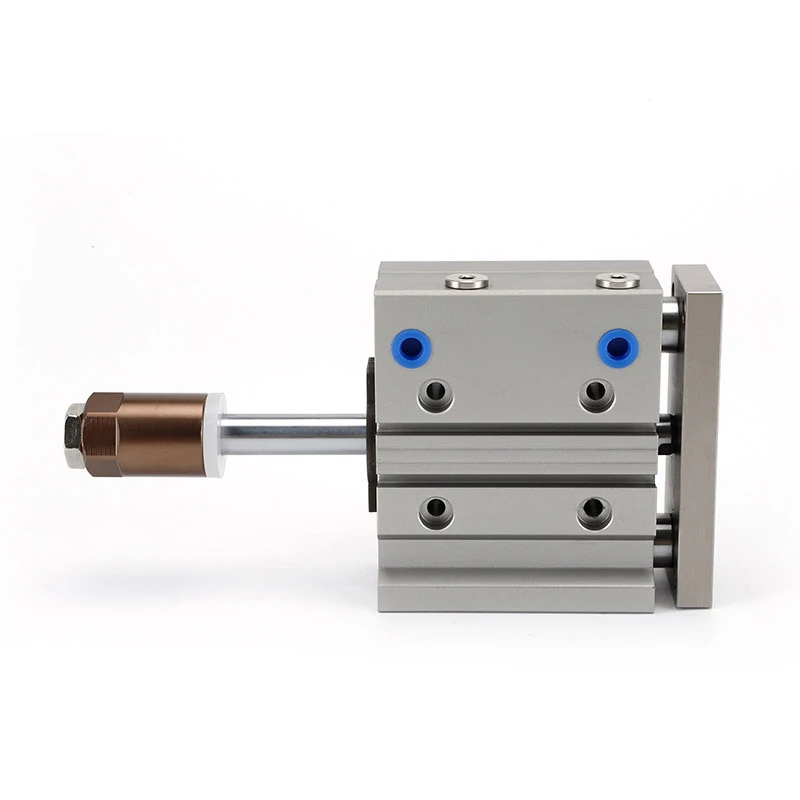
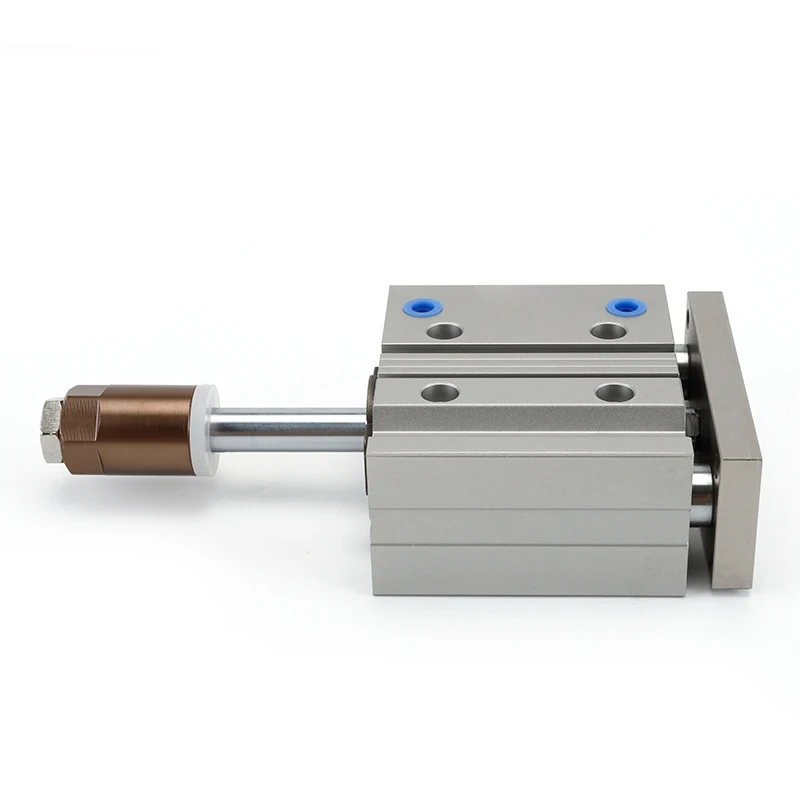
Ultra-thin Compact Integrated Structure: Optimized thin cylinder body design reduces overall installation length by nearly 30% compared with conventional three-axis cylinders, saving precious internal space of compact automation equipment while maintaining consistent thrust performance.
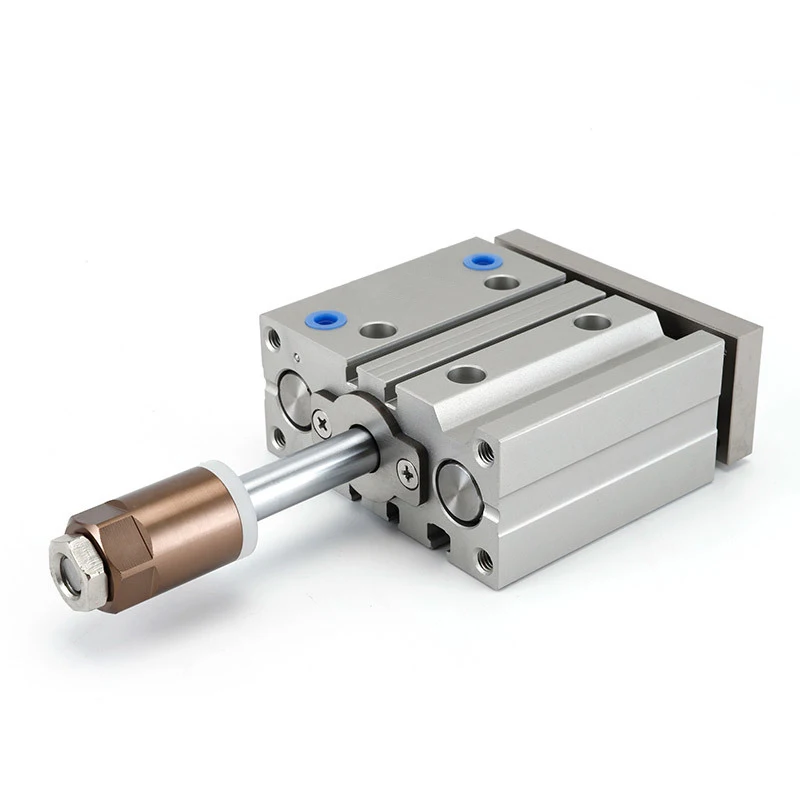
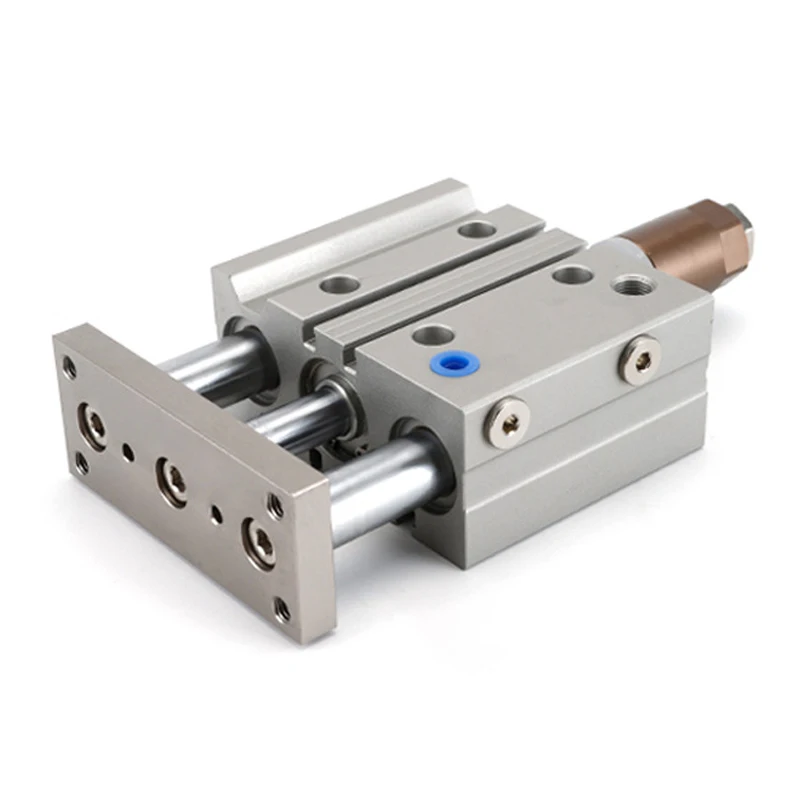
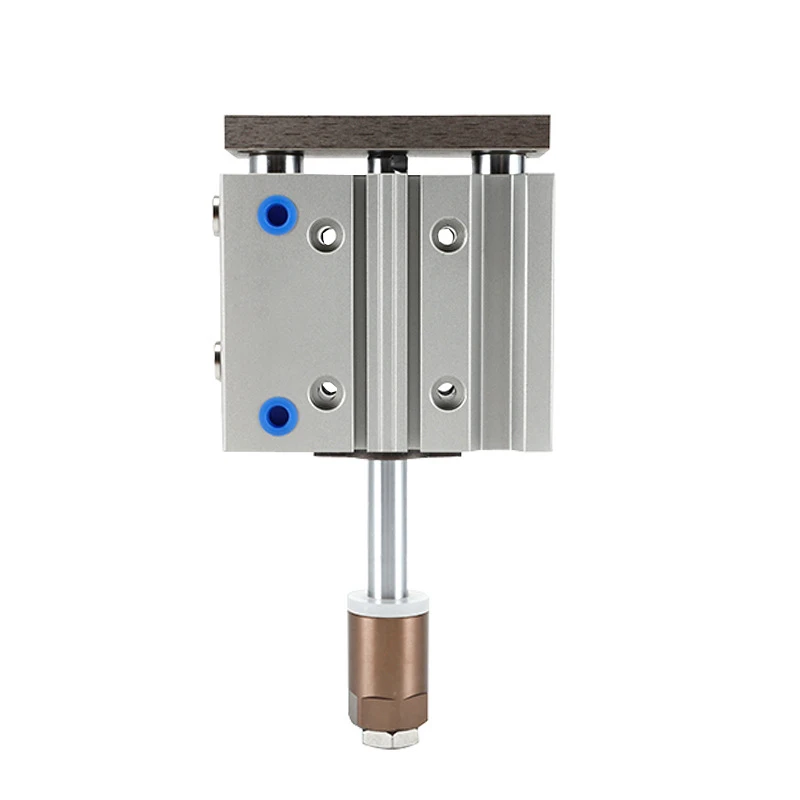
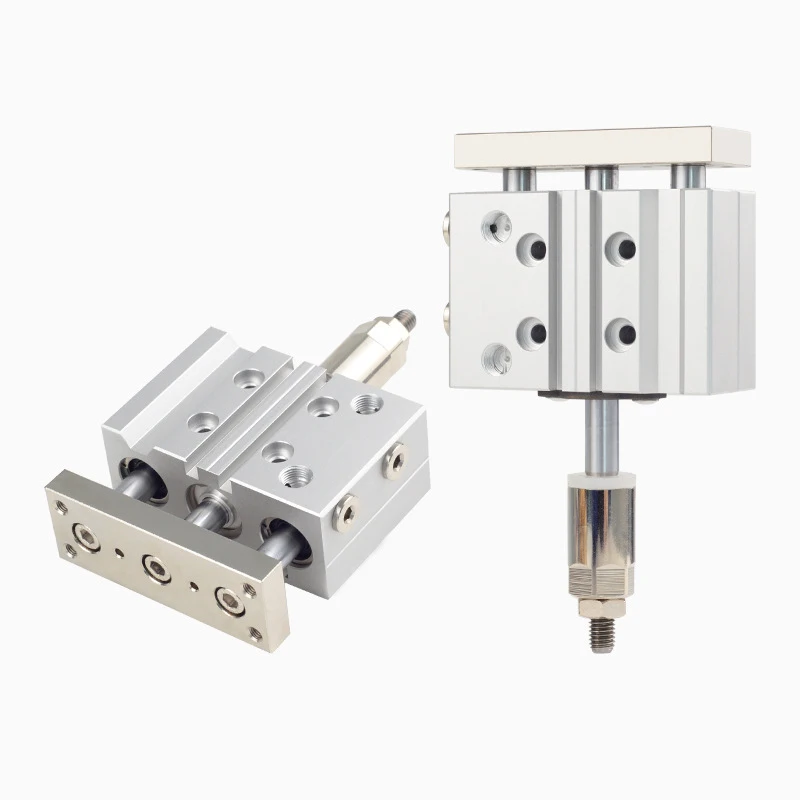
Dual Guide Rod Anti-rotation & High Side Load Resistance: Two synchronous high-precision bearing steel guide rods restrict piston rod rotation completely, providing outstanding anti-torsion capability and strong lateral load resistance; no workpiece deflection during offset loading working scenarios.
Rear Built-in Stroke Adjustment Function: Integrated adjustable limit mechanism at the cylinder rear end realizes accurate stroke positioning, supporting flexible travel adjustment according to actual production demands; no external stop block required to simplify equipment structure.
High-precision Linear Bearing Guidance: Adopts durable linear ball bearings for smooth low-friction reciprocating movement, ensuring steady running speed, low operating noise and high repetitive positioning accuracy for long-term cyclic operation.
High-strength Wear-resistant Sealing System: Imported NBR composite sealing rings feature automatic wear compensation, excellent air tightness and oil resistance; effectively prevent internal and external air leakage under long-term high-frequency continuous operation.
Universal Magnetic Sensor Groove & Multi-port Design: Reserved side sensor mounting grooves support real-time position signal detection; dual air ports on top and side meet different pipeline wiring demands for diversified installation environments.
Product Advantages
First, High thrust output with ultra-thin size. Balances compact space occupation and powerful driving force, ideal for narrow-space automation scenarios where standard thick cylinders cannot be installed. Second, Zero rotation and high positioning accuracy. Dual guide rod synchronous structure eliminates rod rotation thoroughly, guaranteeing consistent positioning accuracy for clamping and pressing processes. Third, Integrated stroke adjustment cuts extra accessories cost. Built-in adjustable stroke design removes the need for external limit blocks, reducing overall equipment accessory procurement cost and assembly steps. Fourth, Strong anti-deflection ability for offset loads. Excellent lateral force resistance adapts to unbalanced offset workpiece pressing that common single-rod cylinders cannot handle stably. Fifth, Cost-effective direct replacement compatibility. Compliant with industry general installation dimensions, compatible with mainstream automation equipment, easy plug-and-play replacement with no fixture modification needed.
How to Use
First, select matched bore size based on required thrust, stroke and installation space: 12/16/20/25mm small bore for light-duty positioning and jacking; 32/40/50/63mm large bore for heavy-duty pressing and clamping. Check cylinder body surface, guide rod smoothness and sealing integrity before installation. Second, fix the TCLJ three-axis cylinder firmly via standard mounting holes, ensure the cylinder keeps horizontal installation state to avoid guide rod unilateral wear caused by inclined stress. Third, connect pneumatic pipelines to top or side air ports according to on-site wiring layout, adjust working air pressure within standard range of 0.2-0.8MPa, prohibit overpressure operation. Fourth, conduct no-load idle test run, check whether the piston rod runs smoothly without jamming, abnormal noise or shaking; adjust buffer speed to reduce mechanical impact at stroke endpoints. Fifth, fine-tune rear stroke adjustment knob to set accurate working travel, lock the limit nut tightly after parameter confirmation to prevent stroke offset during long-term vibration. Sixth, carry out load test operation to verify stable thrust output and no rod rotation, then put into formal automated production. For daily maintenance, keep guide rods clean and dust-free regularly; add lubricating oil periodically to reduce bearing friction; replace sealing components timely once slow movement or air leakage occurs.






 EN
EN
 AR
AR
 BG
BG
 HR
HR
 CS
CS
 DA
DA
 NL
NL
 FI
FI
 FR
FR
 DE
DE
 HI
HI
 IT
IT
 KO
KO
 NO
NO
 PL
PL
 PT
PT
 RO
RO
 RU
RU
 ES
ES
 SV
SV
 TL
TL
 ID
ID
 SR
SR
 UK
UK
 ET
ET
 HU
HU
 TH
TH
 TR
TR
 FA
FA
 AF
AF
 MS
MS
 GA
GA
 BE
BE
 MK
MK
 AZ
AZ
 BN
BN
 LA
LA
 UZ
UZ
 HAW
HAW
 KY
KY
